People and institutions
RESEARCHER
Dr. GIULIA BATTISTONI
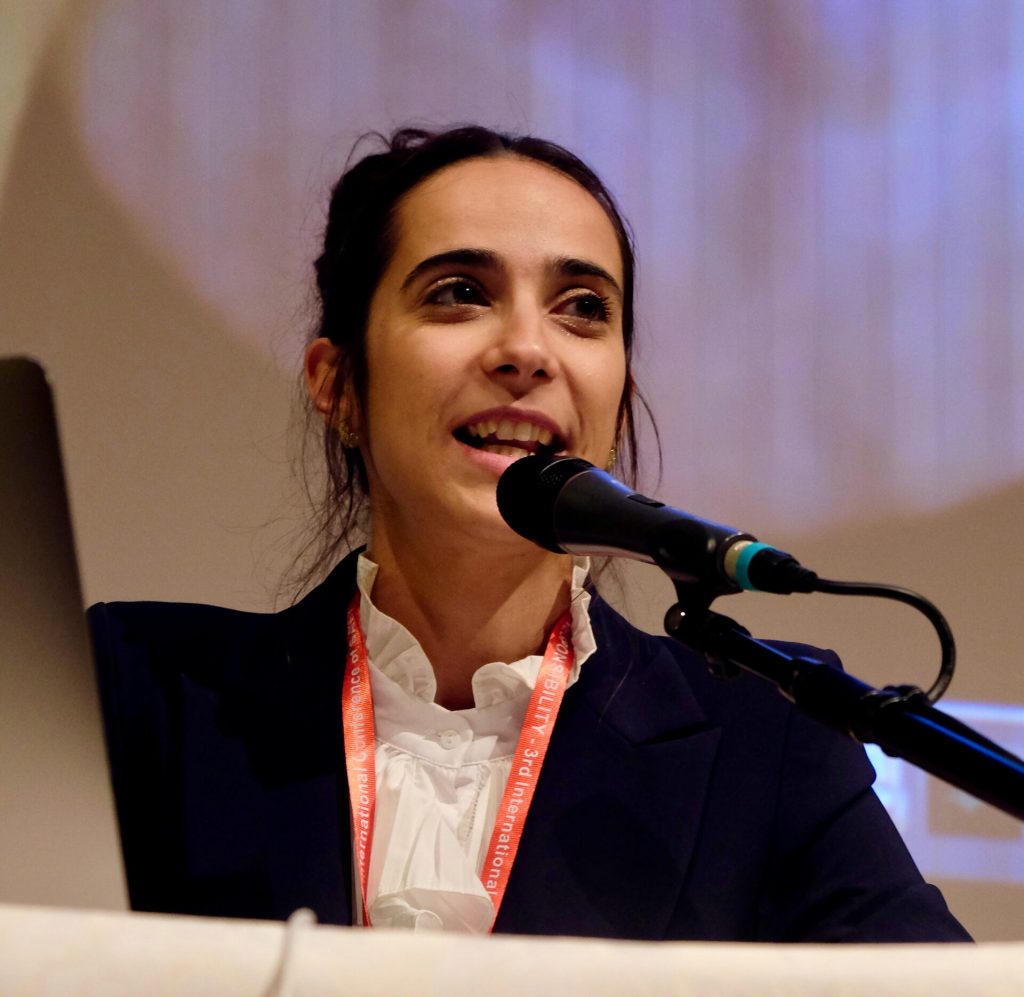
Dr. Giulia Battistoni is currently an Alexander von Humboldt Fellow at the University of Münster (Germany), with the project Elemente einer nicht-szientistischen Naturkonzeption in der Klassischen Deutschen Philosophie (von Kant bis Jonas). She was previously a Marie Skłodowska-Curie Postdoctoral Global Fellow at the University of Verona (2022–2025), with the project Collective Responsibility Towards Nature and Future Generations.
Her main research interests include Classical German Philosophy, particularly Kant’s and Hegel’s practical philosophies; philosophy of nature between the eighteenth and nineteenth centuries and its implications for environmental ethics; ethics of responsibility (Hans Jonas); and ethics of communication (Karl-Otto Apel and Jürgen Habermas). On these topics, she has published two monographs — Azione e imputazione in G.W.F. Hegel alla luce dell’interpretazione di K.L. Michelet (IISF Press, 2020) and Il privilegio della follia. Hegel tra diritto, morale e antropologia (Il Mulino, 2024) — and has edited nine collective volumes, six of which appeared as special issues of internationally recognized peer-reviewed journals. She has authored numerous articles in several languages, receiving the Sainati Prize (2020) and the Prize of the Italian Society of Moral Philosophy for Best Published Essay (2020). She regularly participates as an invited speaker at national and international conferences. She is Co-President of SAFI – Societas Aperta Feminarum in Iuris Theoria (https://safi-network.org/about/) and a member of the Board of the Società Italiana di Filosofia Morale.
As an Alexander von Humboldt Fellow, Giulia Battistoni will be working at the University of Münster from November 2025 till Aprile 2027 under the supervision of Prof. Michael Quante.
For further information, see:
Supervisor: Prof. MICHAEL QUANTE (University of Münster)

Prof. Michael Quante is Professor of Practical Philosophy and Vice-Rector for Internationalization, Knowledge Transfer, and Sustainability at the University of Münster, where he also serves as a principal investigator in the Cluster of Excellence Religion and Politics and as a member of the University’s Bioethics Centre. He plays an active role in national and European scientific advisory bodies, including Germany’s Central Ethics Commission for Stem Cell Research and the permanent working group on science and ethics of ALLEA (All European Academies). He is widely recognized as one of the leading scholars of German Idealism, philosophy of personhood, and bioethics, and his research has shaped international debates in these fields. His influential monographs include Hegels Begriff der Handlung (frommann-holzboog, 1993), which has become a standard reference on Hegel’s theory of action, and Die Wirklichkeit des Geistes (Suhrkamp, 2011), an important contribution to contemporary discussions on Hegel’s philosophy of spirit. Personales Leben und menschlicher Tod (Mentis, 2002) has been particularly influential in bioethical discourse, addressing issues of personal identity, death, and human dignity. In addition to these works, he has published extensively on Marx, practical philosophy, and normative questions of responsibility. Alongside his monographs, Quante has co-edited numerous collective volumes and critical guides that are widely used in research and teaching, among them Hegel’s Phenomenology of Spirit: A Critical Guide (Cambridge University Press, 2008, with Dean Moyar), the Marx-Handbuch: Leben – Werk – Wirkung (Metzler, 2015), and the Kleines Werklexikon der Philosophie (WBG, 2012). Quante has also taken on significant leadership roles within the philosophical community. He served as President of the German Society for Philosophy (Deutsche Gesellschaft für Philosophie) between 2012 and 2014, and since 2013, he has been co-editor of Hegel-Studien, one of the most authoritative international journals on Hegel and German Idealism. His scholarship demonstrates both historical depth and systematic breadth, bridging the traditions of classical German philosophy with pressing questions in contemporary ethics, political philosophy, and biomedicine.
For further information, see: https://www.uni-muenster.de/PhilSem/mitglieder/quante/quante.html.